Undercut
Disconnected · slick top
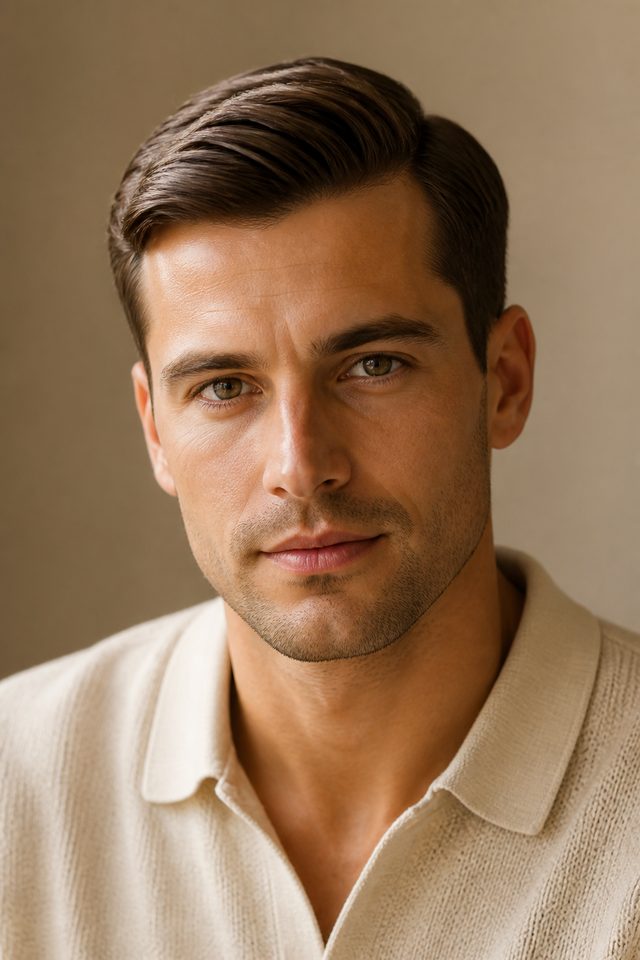
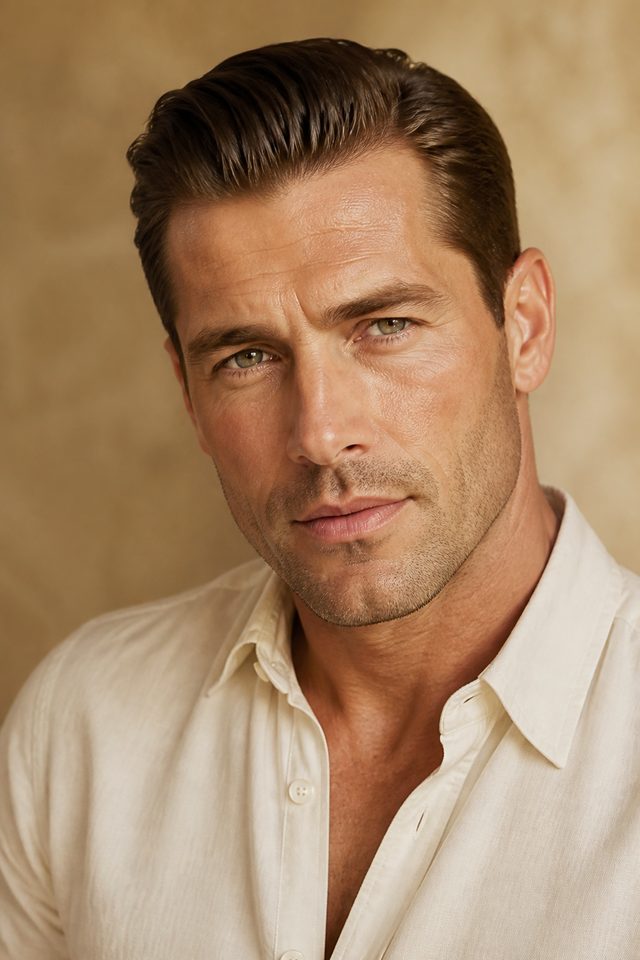
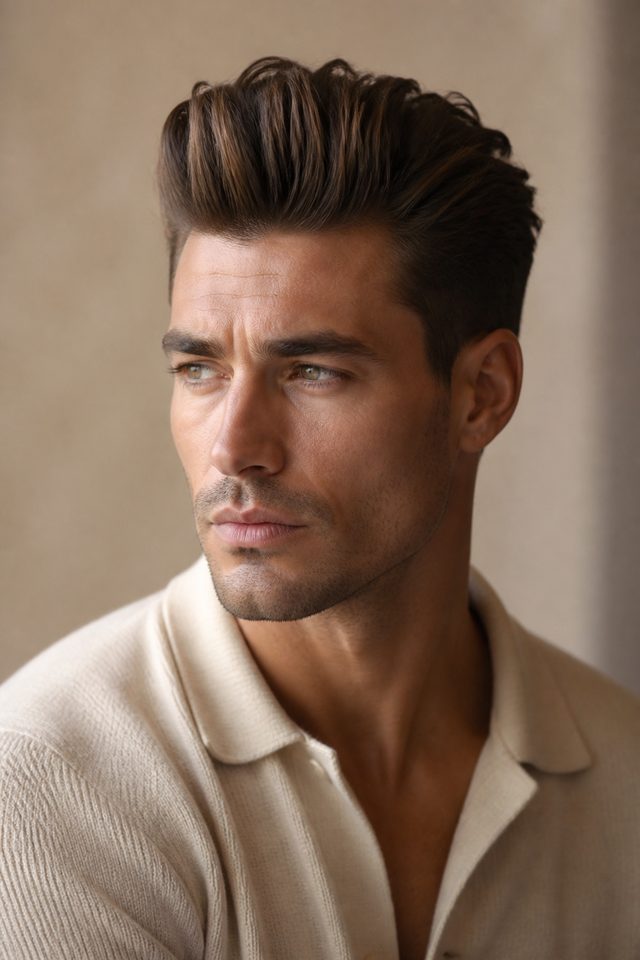
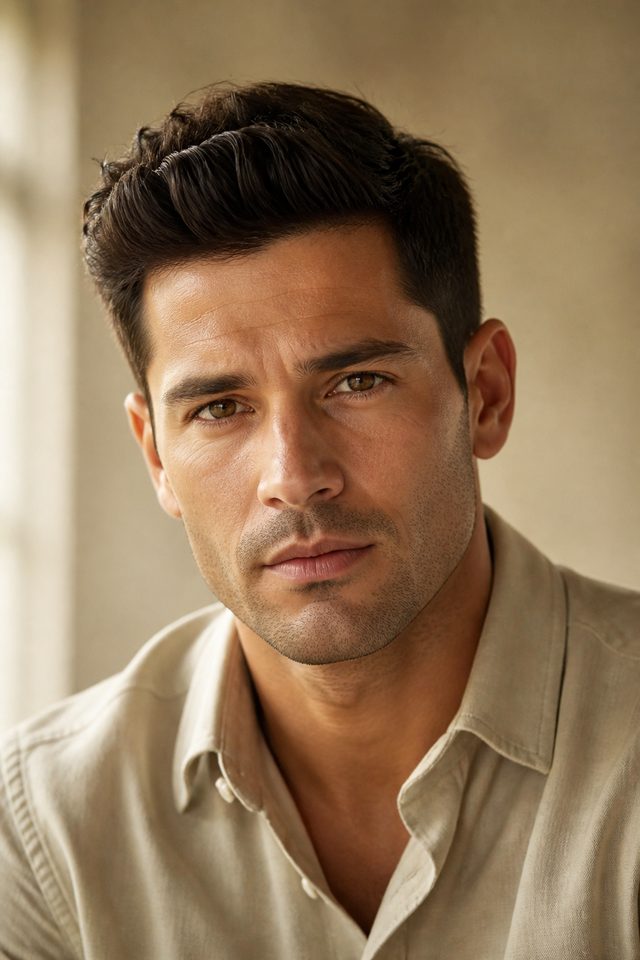
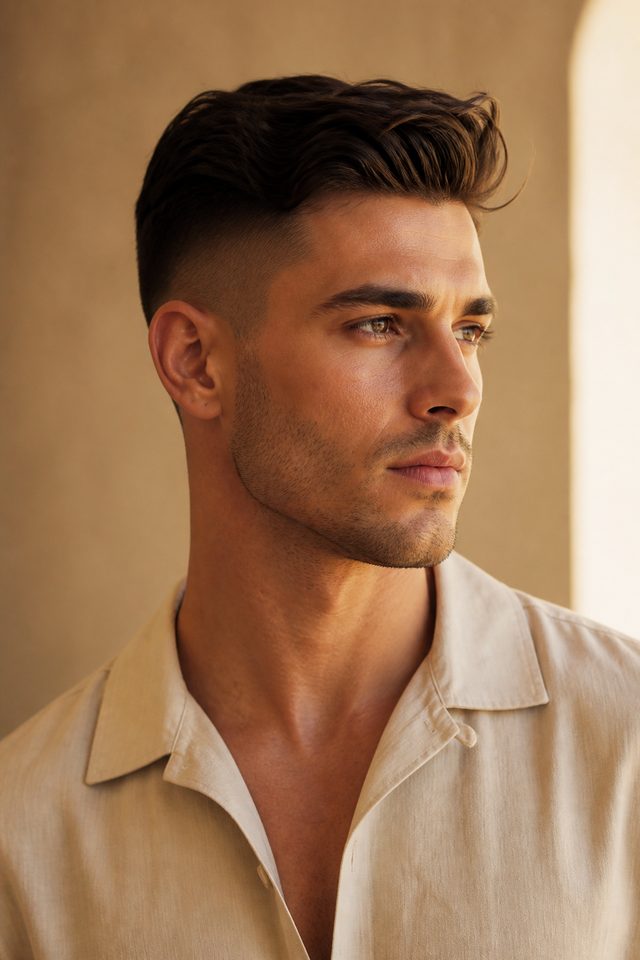
An undercut clips the back and sides to one uniform length, anywhere from skin to a #2, with no blending into the top. The top stays long, four inches or more, classically slicked straight back. The visible disconnection line is the point; it reads deliberate, not faded.
Who it suits
The hard contrast suits angular faces, and heart shapes carry the fuller top well. Thick, straight, or wavy hair makes the cleanest disconnection; curls work if the top is worn loose instead of slicked. Round faces can wear it with height on top, but wide cheeks over bare sides can read severe.
Sides need clipping every two to three weeks, though the disconnection hides grow-out better than a fade does. The slicked top adds a few minutes of daily product.
Undercut — common questions
What's the difference between an undercut and a fade?
A fade blends from skin up through the guards, so the sides are a gradient. An undercut is one length everywhere on the sides with a visible jump to the long top, no blend at all. Fades read athletic and modern; undercuts read sharper and more retro.
Can you wear an undercut without slicking it back?
Yes. The same cut works with the top pushed loosely back with texture, dropped forward into a long fringe, or tucked to one side. The disconnection underneath does not care what the top does, and that flexibility is why the cut has stuck around.