Modern Mullet
Party back · edgy
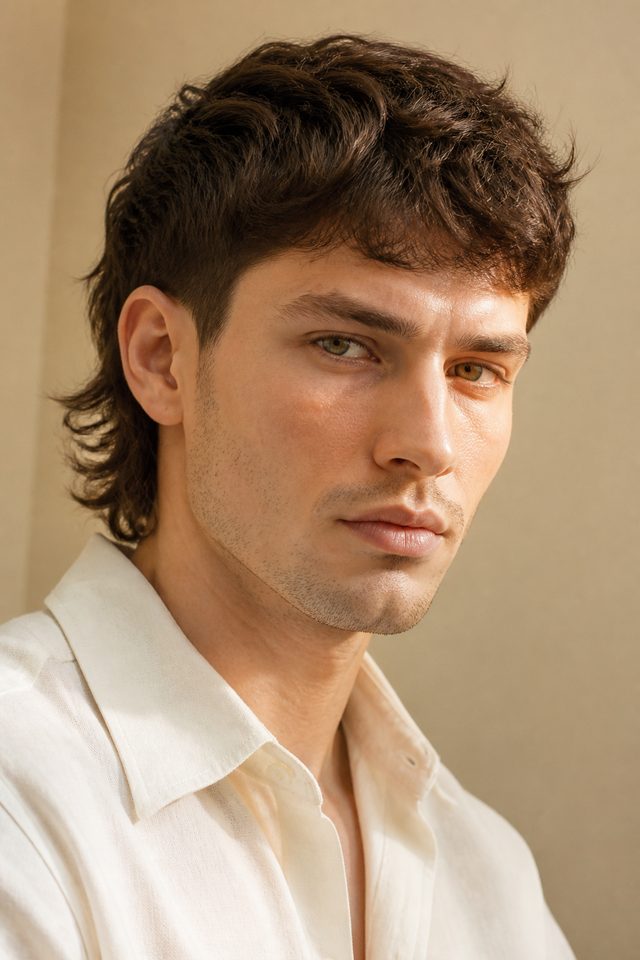
The modern mullet keeps the front and top cropped and textured, tapers the sides, and lets the back run past the collar. The difference from the 80s version is blend: today's mullet transitions gradually, often with a fringe up front and point-cut texture through the crown.
Who it suits
Wavy and curly hair makes the best mullets, since the back needs body to avoid hanging in strings. Angular faces suit the strong silhouette. Fine, straight hair tends to go limp in the back panel, and anyone in a conservative office should be realistic about how the cut reads.
The front and sides need reshaping every three to four weeks or the whole cut loses its logic. The back just grows. Style the top with matte paste or salt spray.
Modern Mullet — common questions
What makes a mullet modern?
Blending and texture. The old mullet had a hard line between short front and long back; the modern one tapers the sides, texturizes the top, and lets the back build gradually. It borrows from shags and crops, so it reads intentional rather than left over from 1987.
Can you wear a mullet to work?
In creative fields, trades, and most casual workplaces, yes; it is common enough now that nobody blinks. In client-facing corporate settings it still draws attention. A shorter back, more grown-out taper than true party panel, is the hedge if you are unsure.