Dutch Braids
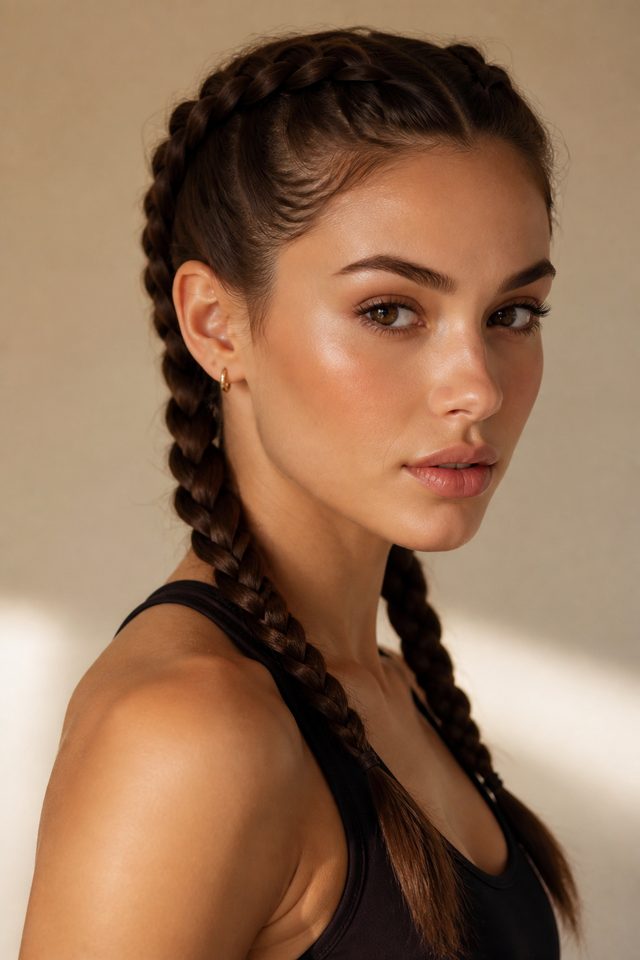
Two braids · sporty
Dutch braids are French braids inverted — sections cross under instead of over, so the braid sits raised on top of the hair like a rope laid along the scalp. Worn as a pair they're sporty and secure; pancaked wide, they turn into something more editorial.
Who it suits
Because everything is pulled off the face, bone structure is on display — oval, heart, and diamond faces wear the exposure easily, while round faces often like a loose face-framing strand left out. Any texture from straight to coily braids well; short layers may need pins for escapees.
Ten minutes once your hands know the under-cross, and it lasts a full active day — sleep in them and you get waves as a parting gift. No trims, no heat.
Dutch Braids — common questions
What's the difference between Dutch braids and French braids?
One move: French braids cross sections over the center strand, Dutch braids cross under. That flips the braid from woven-in to sitting proud on top. Dutch braids photograph more dramatically and pancake wider; French braids look more classic and flat.
Are Dutch braids the same as cornrows?
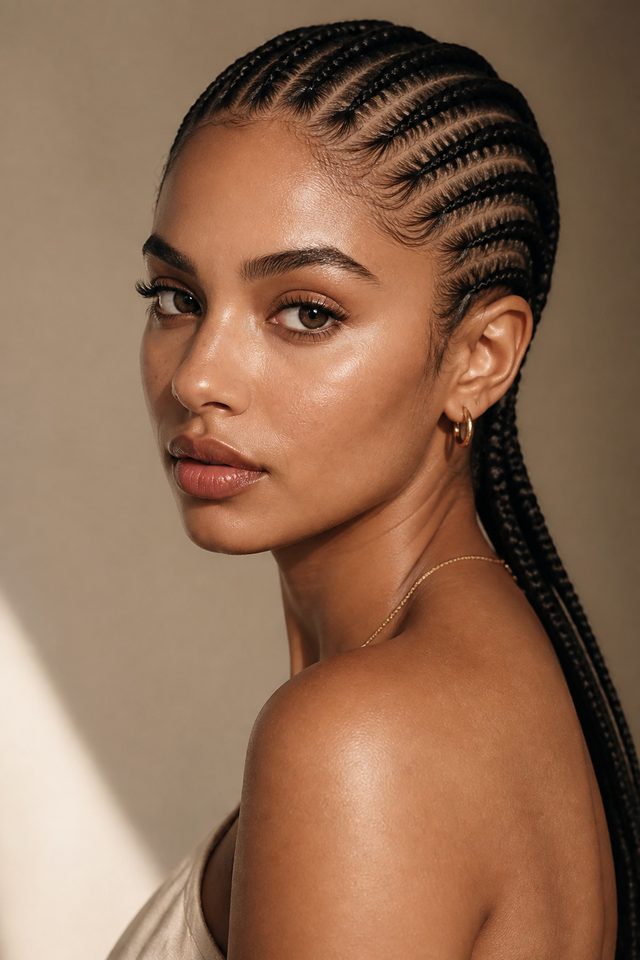
The technique is nearly identical — both cross under along the scalp. Cornrows are typically smaller, braided in multiple rows very close to the scalp as a lasting style, and are rooted in African braiding traditions. Two big Dutch braids are a day style; cornrows are an install.