Curtain Bangs
Face-framing · parted
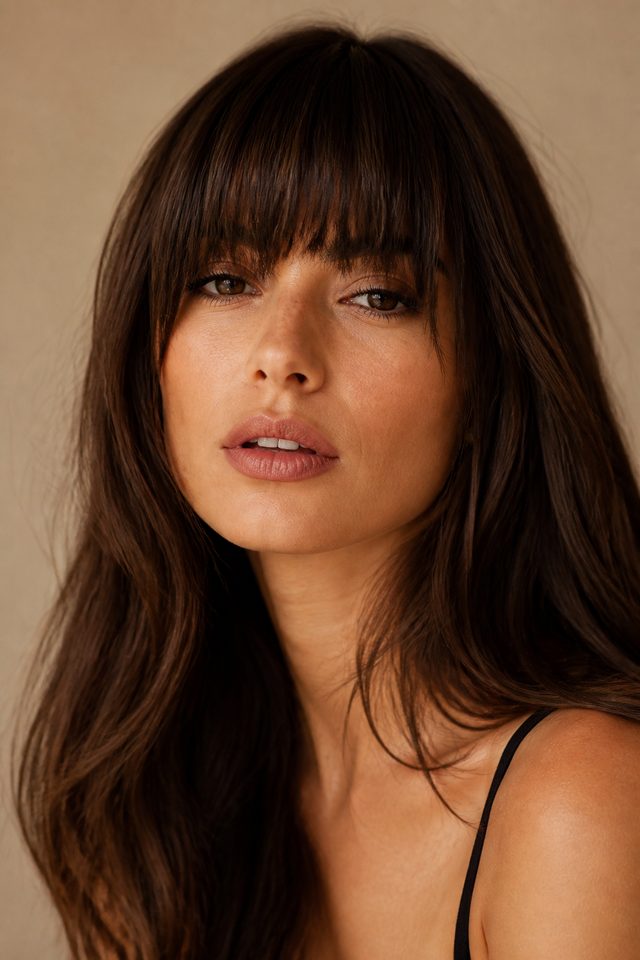
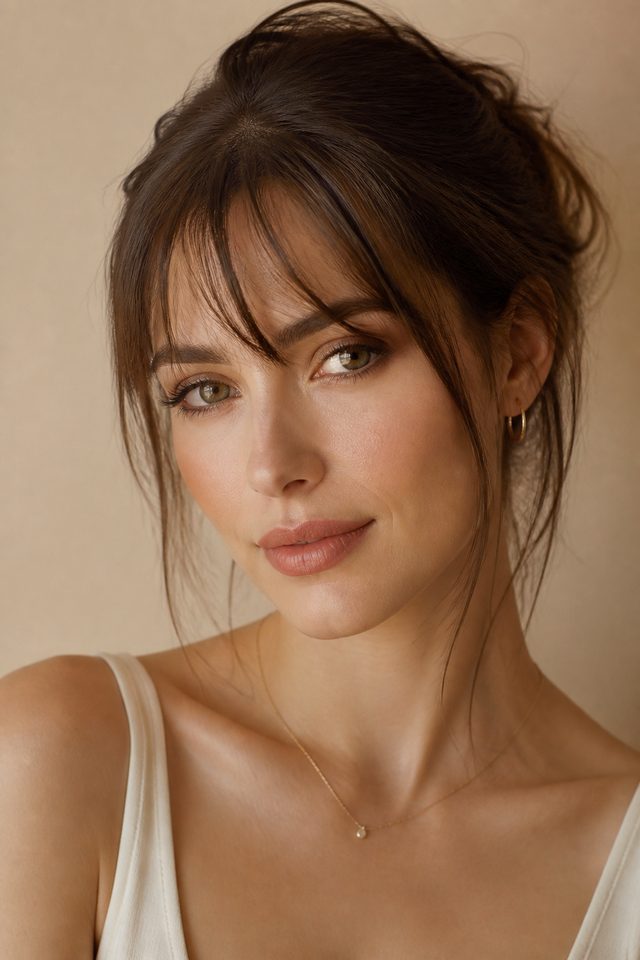
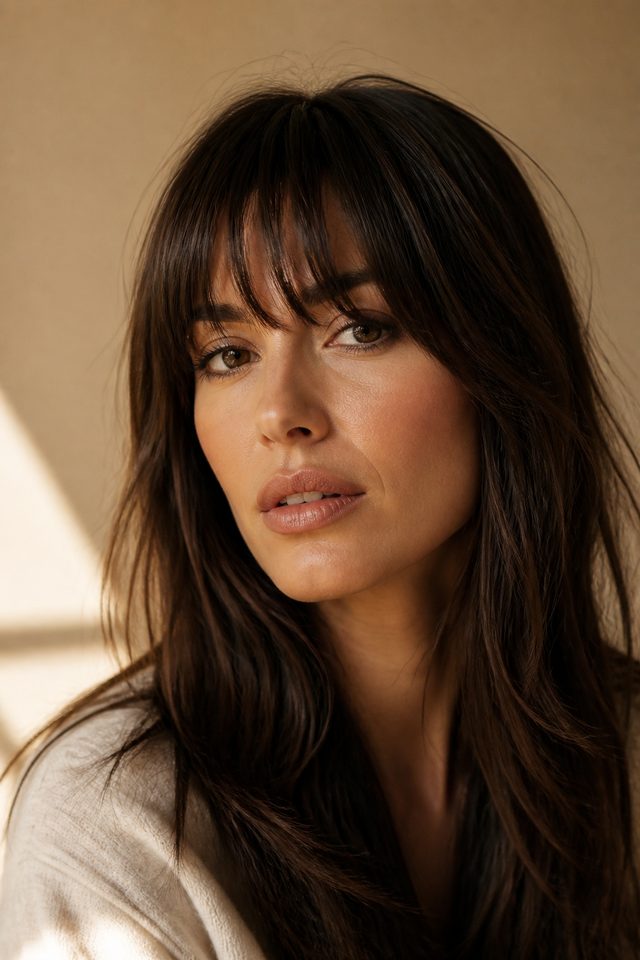
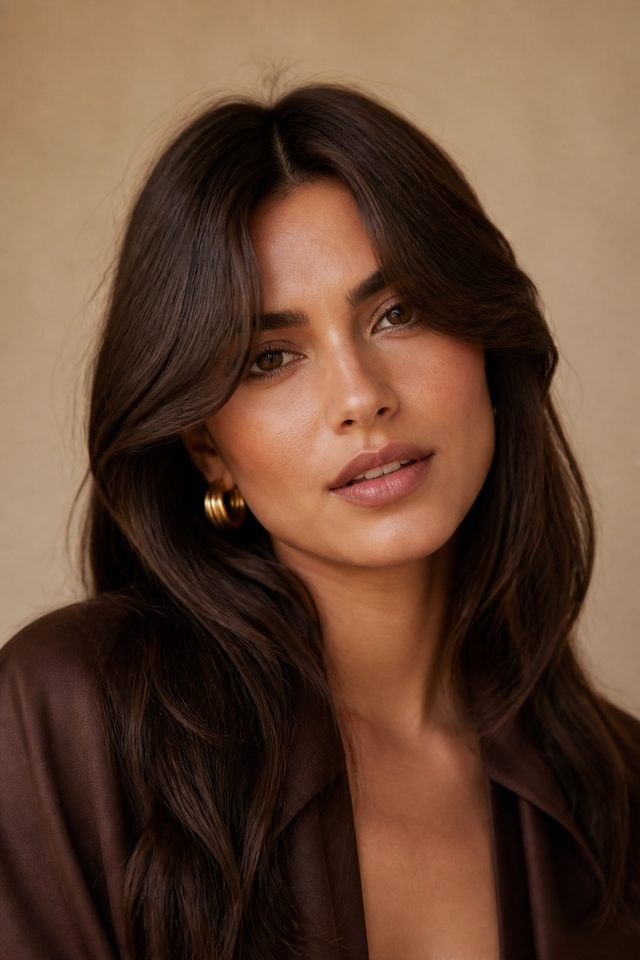
Curtain bangs part down the middle and sweep to each side, shortest at the center and melting into face-framing length at the temples. They open up the face rather than covering it, which is why they've become the default answer to the should-I-get-bangs question.
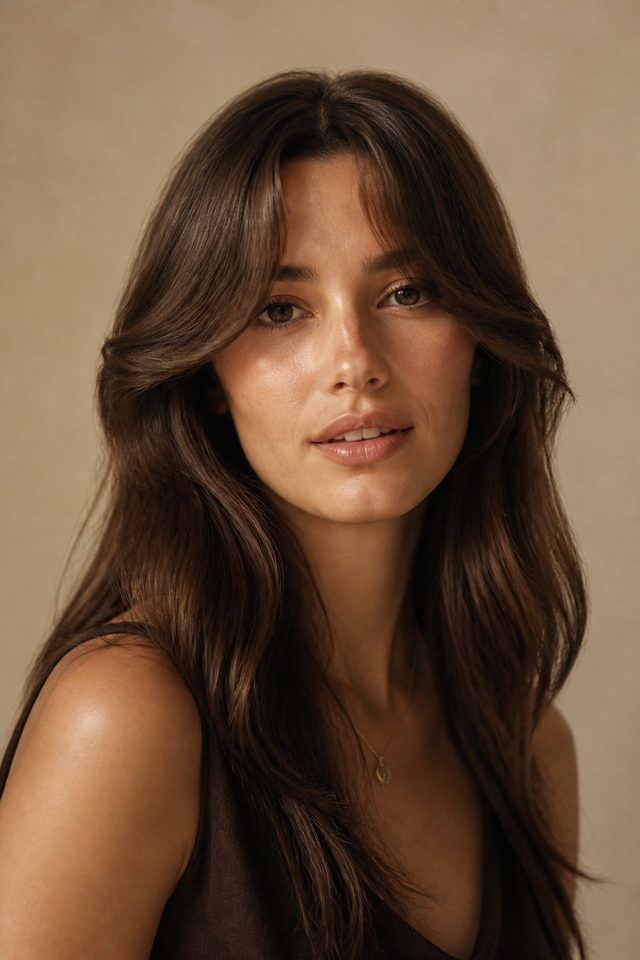
Who it suits
Genuinely most faces: the side sweep softens square jaws, narrows round faces, and shortens a long forehead. They're easiest on straight to wavy hair with some density at the hairline. Strong front cowlicks or very tight curls make them harder to train — possible, just more work.
They need a dust every 3-4 weeks to stay out of your eyes; many salons trim bangs free between cuts. A two-minute round-brush or velcro-roller set keeps the bend.
Curtain Bangs — common questions
Do curtain bangs work with a middle part only?
They're built for a middle or slightly off-center part, but they're flexible — swept fully to one side they read as side bangs. What they won't survive is a severe deep side part, which collapses the curtain shape.
How do you grow out curtain bangs?
More easily than any other fringe. Because they're already angled toward the sides, they simply become face-framing layers as they grow. Tuck them behind the ears or pin them during the chin-length phase.
Do curtain bangs suit thin hair?
Yes, if they're cut on the sheer side. Taking too deep a section from a fine hairline can make the rest of the hair look sparse, so ask for a shallow, wispy version.