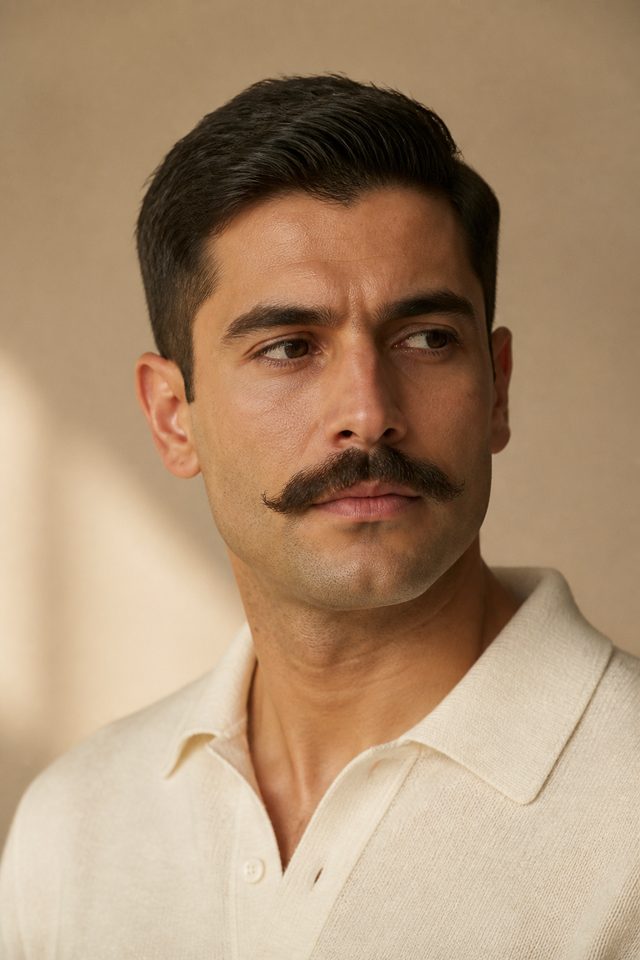
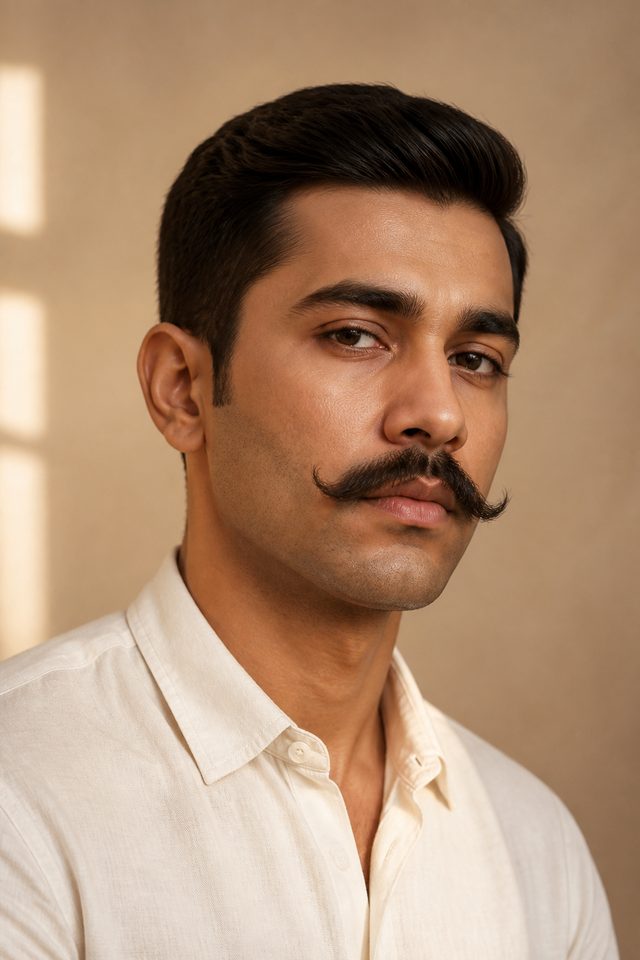
Van Dyke
Goatee + moustache · detached
Pointed chin beard below, detached moustache above, everything else shaved: that is the Van Dyke, named after the 17th-century painter Anthony van Dyck. The shaved gap at the mouth corners is what separates it from a circle beard. Three to four weeks of growth gets you there.
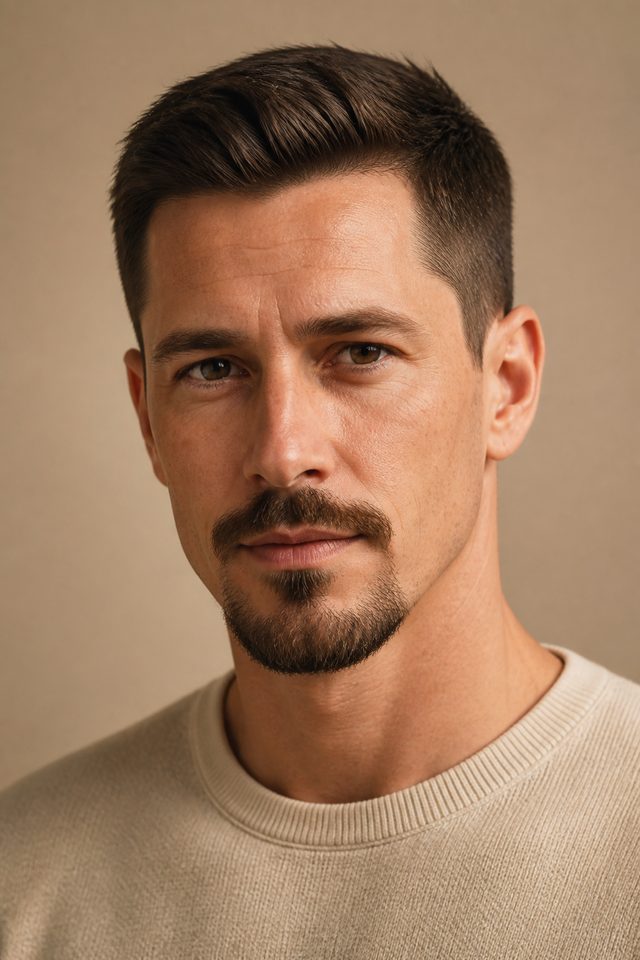
Who it suits
The downward point lengthens round faces and puts a focal point on the chin of square ones. Density only matters on the chin and upper lip, so patchy cheeks are irrelevant. If your face is long or your chin already sharp, the point exaggerates both; a fuller, shorter style balances better.
Two separate shapes means double the edging: shave the cheeks and the gap every day or two, trim the chin point weekly, and keep the moustache combed. A detail trimmer earns its keep here.
Van Dyke — common questions
What is the difference between a Van Dyke and a goatee?
A goatee is chin hair alone. The Van Dyke adds a moustache but keeps it detached from the chin piece, with a shaved gap at the mouth corners. Connect the two and you are wearing a circle beard instead. The detachment is the defining detail.
What face shape suits a Van Dyke?
Round and square faces benefit most: the chin point adds length to the round and focus to the square. Oval carries it easily. Long and heart-shaped faces should hesitate, since more chin emphasis is the last thing either needs.